
GDI Worldwide is an international hospitality assessment company that audits hotels against brand standards and writes and digitizes hotel standards and SOPs. The template and advice below come from that work. Use them for any department, and adapt the wording to your own brand.
What is a hotel SOP, and what does a hotel SOP manual contain?
A hotel SOP says how to do one task: who does it, with what, in which order and by when. A hotel SOP manual is the full set of those SOPs, grouped by department and sub-department so each team finds the procedures it uses.
An SOP is not the same as a brand standard. The brand standard defines what the result must look like. The SOP describes how the team delivers it. Good SOPs name the standard they support, so the two never drift apart.
What fields does a hotel SOP template need?
Copy the text below into a document, wiki or spreadsheet and complete one copy per task. Keep every field. A blank field usually points to a question nobody has answered yet, such as who owns the SOP or what a team member does when the equipment fails.
Hotel SOP template

Title: [task name, starting with a verb]
Department and sub-department: [for example Food and beverage / Beverage]
SOP code: [department code and number]
Purpose: [one sentence on why this task matters to the guest or the hotel]
Owner: [role that keeps this SOP correct]
Linked brand standard: [standard code and name]
Applies when: [trigger, place and shift]
Materials and equipment: [item and quantity, one per line]
Timing: [start time, duration and deadline]
Responsibilities: [who does it, who checks it, who is told]

Steps (one action per step)
Step 1: [action starting with a verb]
  Check: [what you can see, count or measure when it is right]
  Photo or video: [file name or link]
Step 2: [action starting with a verb]
  Check: [observable result]
  Photo or video: [file name or link]
Step 3: [add more steps as needed]
  Check: [observable result]
  Photo or video: [file name or link]

If something goes wrong
Problem: [what can fail]
  Do this: [first action]
  Tell: [role and how]

Review date: [date of next review]
Version: [number]   Date: [date]   Changed by: [name or role]
What changed: [one line]
Approved by: [role]
Two fields are skipped most often. The linked brand standard keeps the SOP tied to what auditors and managers check. The section on what to do when something goes wrong turns a rule into something a new colleague can handle alone.
What does a filled hotel SOP look like?
This example uses a fictional hotel. Times, counts and flavours are example values, so replace them with your own brand's specifications.
Example SOP, fictional hotel
Set up the beverage station
- Department and sub-department
- Food and beverage / Beverage
- SOP code
- FB-SOP-021
- Purpose
- Guests find a clean, complete station that is ready to serve when the lobby lounge opens.
- Owner
- Food and beverage manager
- Linked brand standard
- FB-BEV-014 Beverage station
- Applies when
- Every morning, before the lobby lounge opens
- Materials
- Bean-to-cup machine, beans, cups and lids, stirrers, three syrups, cloth, opening sheet
- Timing
- Start 45 minutes before opening and finish 30 minutes before (example values)
- Responsibilities
- Lobby host sets up. Food and beverage supervisor checks 15 minutes before opening.
Step 1. Wipe the counter and drip tray dry.
Check: The counter shows no spills or residue and the tray is empty.
Step 2. Switch on the machine and wait for the ready light.
Check: The display reads Ready. This takes about 5 minutes (example value).
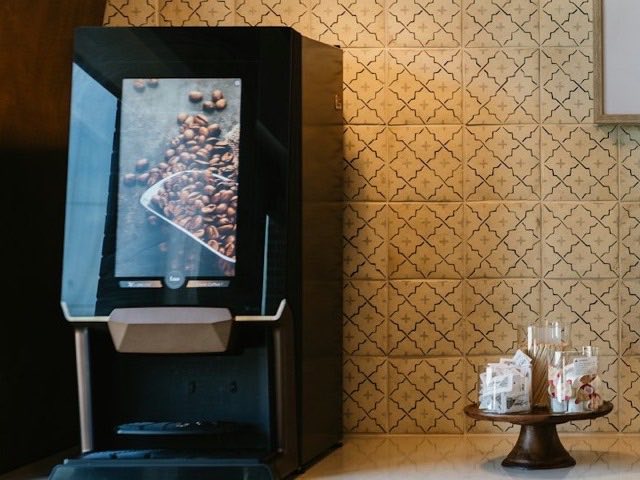
Step 3. Fill the bean hopper and water tank to the marked lines.
Check: Beans reach the line in the hopper and the tank sits above the minimum mark.
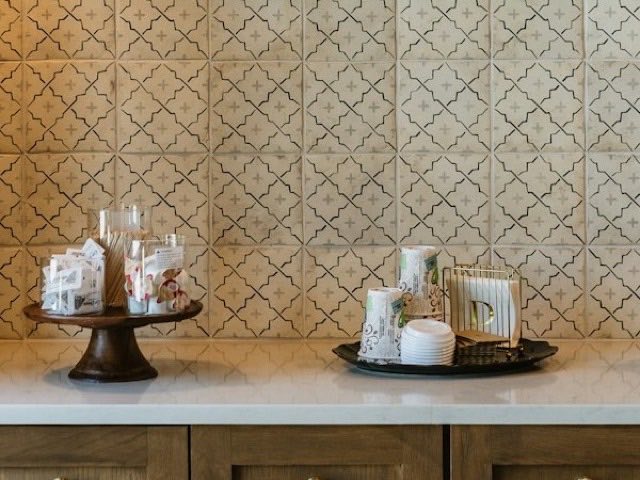
Step 4. Place 40 cups and 40 lids in the stands (example quantity).
Check: Cups stand in two stacks on the left, lids in one stack beside them.
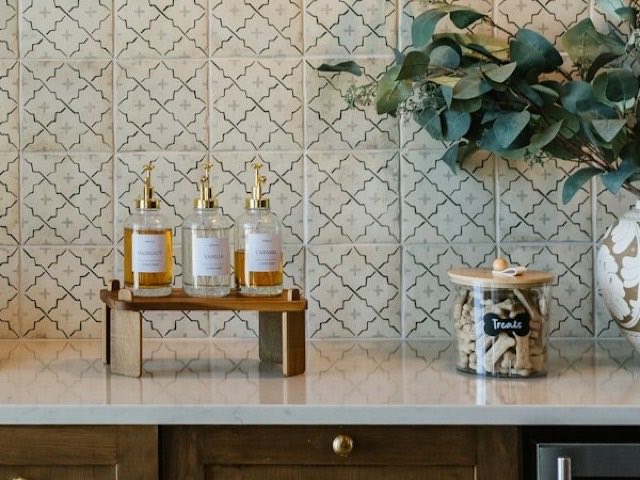
Step 5. Place the three syrups in the tray with labels facing forward.
Check: From left to right: vanilla, caramel, hazelnut (example flavours).
Step 6. Pour one test drink.
Check: The drink is hot and tastes as expected. Pour it away.
Step 7. Initial the opening sheet with the time.
Check: The sheet shows initials and a time at least 30 minutes before opening.
If something goes wrong
- The machine shows an error: run the rinse cycle and restart it once. If the error stays, place the out of order sign, tell the supervisor and offer to bring coffee from the restaurant.
- Stock is below the example quantity: take it from the storeroom and note the shortfall on the opening sheet.
Review and version
Review date: 14 November 2027. Version 1.2, 14 November 2026, changed by the food and beverage manager: syrup order updated. Approved by the director of food and beverage.
How do you write SOP steps people can follow?
- One action per step. If a step contains "and", split it.
- Start with a verb. "Fill the water tank" works better than "The water tank should be filled".
- Give each step an observable result. A check says what a person can see, count or measure, so a supervisor can confirm it without asking.
- Use the numbers from the standard. Quantities, temperatures and times belong in the step, not in a general note.
- Name the item exactly. Write "the grey cloth" or the product name rather than "the usual cloth".
- Put warnings before the step. Safety points must be read before the action, not after.
- Test it. Ask a new colleague to follow the SOP with nobody coaching. Fix every place they hesitate.
How do you add photos and short video to an SOP?
Add an acceptance photo to each step whose result you can see. The photo shows the correct finished result, taken from where the team member stands, in normal working light. Mark the detail that matters with an arrow or label so nobody has to guess what to look at.
Use a short video where movement matters, such as folding, pouring or operating a machine. Many hotels keep clips to under a minute and film one task per clip. Keep the written step beside the clip, because people scan text faster than they watch. Avoid guest faces, and name each file with the SOP code and version so it is replaced when the SOP changes. Read more about pictorial and video SOPs.
How do you link an SOP to a brand standard?
Write the standard's code and name in the SOP header. Then make the SOP's checks match the standard's specification word for word. When the standard changes, review every SOP that points to it. In GDI's digital ecosystem, SOPs are linked to brand standards, so a change to one shows you which SOPs to review.
How often should SOPs be reviewed, and how do you keep versions?
Many hotels review each SOP at least once a year. Review it sooner after a rebrand, a renovation, new equipment, a change of owner, a gap found in an audit or a repeated guest complaint.
- Give every SOP a version number and a date. Use a note of one line on what changed.
- Keep one current master in one place. Remove old printed copies when a version changes.
- Archive earlier versions instead of deleting them, so you can see who changed what and when.
- Record who approved each version.
A digital repository does this for you with a history log, version control and notifications to the right teams.
Which hotel SOPs should you write first?
The lists below are starting points for a hotel SOP manual, not a complete set. Begin with tasks that guests notice and tasks that often go wrong.
Housekeeping SOP
- Departure room cleaning
- Stayover service
- Turndown service
- Public area cleaning
- Lost property handling
Front office SOP
- Check-in
- Check-out
- Room change request
- Luggage handling
- Night shift handover
Food and beverage SOP
- Breakfast buffet setup
- Beverage station setup
- Table service sequence
- Room service delivery
- Bar opening checks
For more hotel SOP examples across departments, GDI's SOP development service writes and updates SOPs with your teams and digitizes them into one library.